
Quick Commerce 2030: From “10-Minute Delivery” to a Sustainable Commerce Model

Quick Commerce
Let’s identify the gaps in Quick Commerce
Be ahead of the competition
Quick Commerce (Q-Commerce) has moved from being a niche experiment to one of the most important changes in modern retail. What began with groceries and daily essentials has expanded into beauty, personal care, electronics, fashion, medicines, fresh produce and even automotive spares.
The bigger question now is not whether Quick Commerce will survive. It is what the winning Quick Commerce model will look like by 2030.
India is particularly interesting. In 2024, quick commerce accounted for more than two-thirds of India’s e-grocery orders and reached roughly $6–7 billion in market value. Bain/Flipkart expected the segment to grow at around 40% annually through 2030. (Reuters) More recent estimates are even more bullish: UBS projects India’s Quick Commerce GMV could reach around $59 billion by FY2030, while noting that rapid expansion and competition could put pressure on margins. (Germany)
The opportunity is significant—but so are the challenges.
1. India: A Market Built for Quick Commerce
India has several structural advantages for Q-Commerce:
High population density in urban areas
Large young, digitally comfortable consumer base
Increasing smartphone and digital-payment penetration
Relatively low last-mile delivery costs
Strong demand for convenience
Dense neighbourhood retail ecosystems
Increasing willingness to pay for time savings
The result is a market where consumers are increasingly asking:
“Why should I wait two hours when I can get it in ten minutes?”
India’s Q-Commerce market has also moved beyond the traditional metro-city grocery model. Platforms are expanding into smaller cities and adding categories. A 2026 SEBI-filed prospectus estimates 1.1–1.3 billion Q-Commerce shipments in FY2025, with shipments potentially growing at 29–44% CAGR through FY2030. It also notes that non-grocery products already represented about 23% of GMV in FY2025. (Securities and Exchange Board of India)
That is an important signal: Q-Commerce is becoming a retail channel, not simply a delivery channel.
2. The Global Picture: India Is an Outlier, Not the Template
Globally, Q-Commerce has developed very differently.
Markets such as China benefit from enormous urban density and sophisticated digital ecosystems. Europe has seen rapid-delivery businesses emerge, consolidate and, in several cases, struggle with profitability. North America has increasingly favoured models that combine grocery, delivery infrastructure and marketplace economics rather than simply promising ultra-fast delivery.
One current market estimate places global Q-Commerce at approximately $198 billion in 2024, with the market projected to approach $294 billion by 2029. (Research and Markets)
But global numbers need to be treated carefully because different research firms define “quick commerce” differently. Some include 10–30-minute grocery delivery; others include same-day and rapid delivery models.
The more important global lesson is this:
Speed alone does not create a sustainable business. Density, basket economics, inventory productivity and customer frequency do.
That is where India could develop a distinctive model.
3. The Biggest Challenge: Unit Economics
The biggest question facing Q-Commerce is deceptively simple:
Can a company make money on every order without depending on discounts and investor capital?
A ten-minute delivery requires a completely different cost structure from conventional e-commerce.
The platform needs:
Dark stores
Inventory close to consumers
Store employees
Technology
Picking and packing
Delivery partners
Multiple delivery routes
Real estate
Working capital
Shrinkage control
Returns and refunds
Customer acquisition
If the average order value is low, the economics become difficult.
This is why increasing Average Order Value (AOV), order frequency and contribution margin will become increasingly important.
Recent industry commentary around Instamart illustrates the scale challenge: Swiggy’s Q-Commerce business has been targeting a substantial increase in annualised order value while trying to avoid restarting aggressive price competition. (The Economic Times)
The industry therefore has to move from:
“How quickly can we acquire customers?”
to:
“How profitably can we serve and retain customers?”
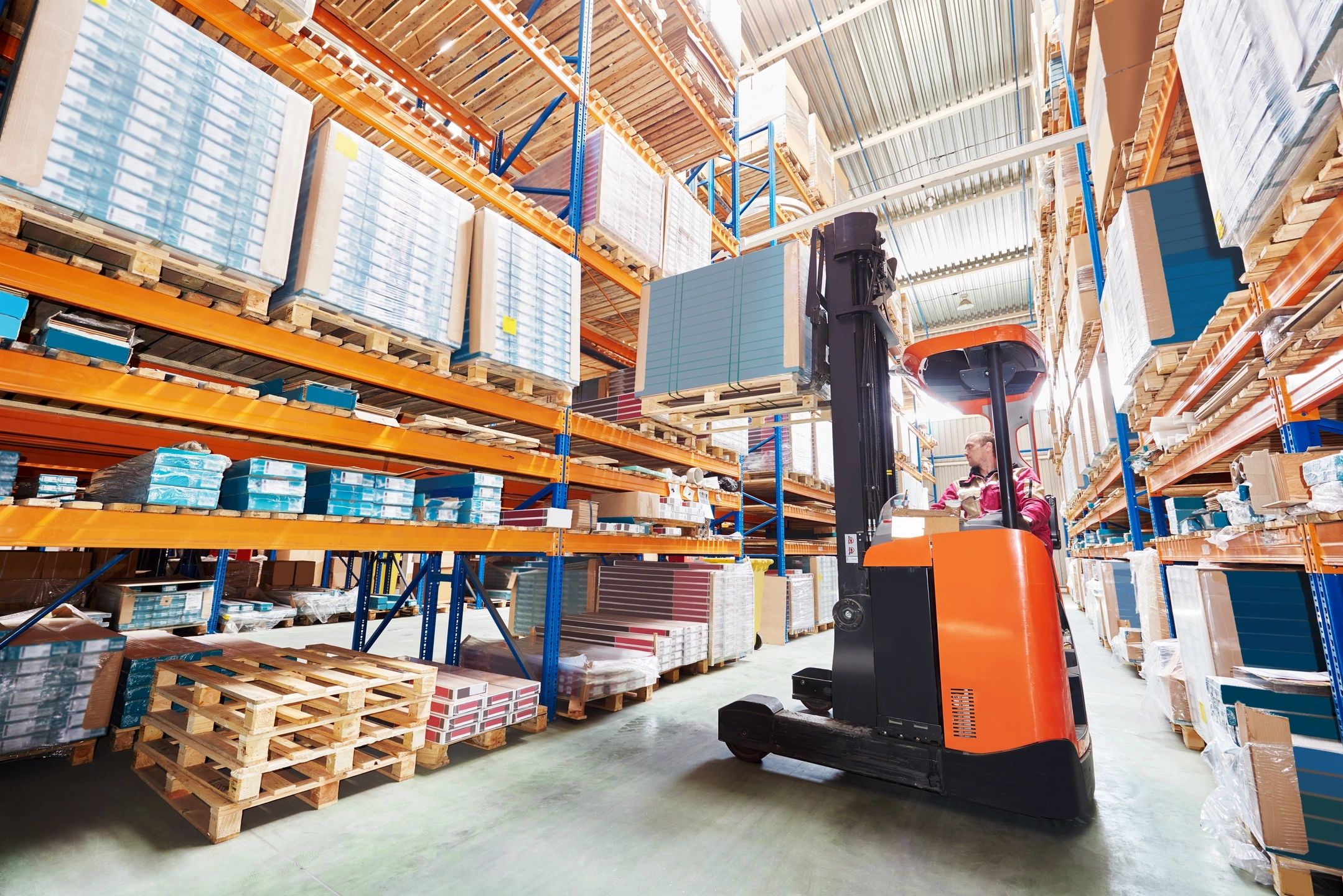
4. Dark Stores: The Engine and the Burden
The dark-store model is one of Q-Commerce’s greatest strengths—and one of its greatest challenges.
A dark store positioned close to customers makes rapid delivery possible. But every additional store adds fixed costs and inventory requirements.
The challenge becomes one of network optimisation:
Where should the next dark store be located, what should it stock, and how many orders must it generate to justify its existence?
Poor location decisions can create:
Low store utilisation
Excess inventory
High rental costs
Higher manpower costs
Delivery inefficiencies
Product wastage
For perishable categories, the problem becomes even more serious.
The future will therefore depend heavily on micro-market economics rather than simply city-level expansion.
5. Inventory Accuracy Will Become a Competitive Weapon
A customer ordering a product expects it to be available.
But maintaining accurate inventory across thousands of SKUs and hundreds or thousands of locations is difficult.
A stock-out can mean a lost order.
An excess stock position can mean:
markdowns,
expiry,
wastage,
working-capital blockage.
This makes demand forecasting, replenishment and inventory visibility central to Q-Commerce profitability.
AI will increasingly help predict:
What customers will order
Where they will order it
When they will order it
How much they will order
Which SKUs should be stocked in which dark store
In other words, the competitive advantage may gradually shift from “faster rider” to “smarter inventory.”
6. The Fresh & Perishable Challenge
Fresh produce, dairy, bakery and other perishables create a special problem.
Q-Commerce customers expect freshness, but the platform must also maintain availability.
This creates a delicate balance between service level and wastage.
Overstock → wastage.
Understock → lost sales.
Poor handling → quality complaints.
Recent food-safety enforcement has highlighted the importance of hygiene and compliance in dark stores and warehouses. Authorities have recently taken action against facilities associated with Q-Commerce platforms for hygiene, labelling and storage issues. (The Times of India)
By 2030, food safety cannot remain a back-office compliance issue. It will become part of the customer proposition.
7. Regulatory and Compliance Pressure
The industry is also entering a more closely scrutinised phase.
Questions around FDI structures, inventory ownership, dark stores, competition, food safety, labour practices, product certification and consumer protection are becoming increasingly important. (Bar and Bench – Indian Legal news)
The regulatory environment will likely become clearer as the industry matures.
This is not necessarily negative.
For serious operators, stronger regulation can create a more level playing field and improve consumer confidence.
The challenge is to build compliance into the operating model, rather than treating it as an afterthought.
8. What Will Change by 2030?
I expect Q-Commerce to become less about 10-minute delivery and more about intelligent convenience.
The 10-minute promise will remain important in high-density locations, but customers will not necessarily need everything in ten minutes.
For many purchases, 20–30 minutes may be economically superior.
This creates opportunities for hybrid models.
BCG and DTDC have already identified a related opportunity in India: “Rapid Commerce”—delivery in the 4–6 hour window using shared dark stores, batched logistics and technology—is forecast to become a $20+ billion GMV opportunity by 2030. (BCG Global)
This could be one of the most interesting developments of the decade.
9. The 2030 Winner Will Not Necessarily Be the Fastest
By 2030, I expect the strongest Q-Commerce businesses to compete on six dimensions:
1. Customer frequency
How often does the customer return?
2. Basket size
Can the platform increase AOV without forcing unnecessary purchases?
3. Inventory productivity
How much sales value can each square foot of dark-store inventory generate?
4. Contribution margin
Can each incremental order become economically attractive?
5. Network productivity
Can the company operate more orders with fewer, better-utilised fulfilment points?
6. Customer trust
Can it consistently deliver the right product, at the promised time and quality?
The industry will also increasingly use advertising, private labels, subscriptions, financial services and other revenue streams to improve economics.
10. The Way Forward
The next phase of Q-Commerce should be about profitable convenience rather than subsidised speed.
Operators should focus on:
AI-led demand forecasting
SKU-level inventory optimisation
Dark-store productivity
Lower wastage
Better route planning
Higher basket sizes
Private-label development
Category expansion based on economics
Shared fulfilment infrastructure
Stronger supplier collaboration
Better rider productivity
Food safety and quality systems
Sustainable packaging and delivery practices
Most importantly, companies should measure the business store by store, SKU by SKU and order by order.
The industry does not need every order to be delivered in five minutes.
It needs every customer interaction to create value for the customer and sustainable economics for the business.
The 2030 Outlook
My expectation is that Q-Commerce will remain a major component of India’s retail ecosystem by 2030, but the industry will look very different from today’s race for delivery speed.
There will likely be greater consolidation, more sophisticated supply chains, wider category coverage and stronger integration between physical stores, dark stores, e-commerce and traditional retail.
India’s broader e-commerce market itself is projected by BCG to reach $280–300 billion by 2030, creating substantial room for Q-Commerce, category-focused platforms and connected online-offline retail to coexist. (BCG Global)
The real transformation, therefore, is not “10-minute delivery.”
It is the emergence of a retail system where inventory is positioned closer to demand, technology predicts what consumers need, and fulfilment becomes almost invisible to the customer.
And that may be the most important lesson from Quick Commerce:
The future of retail will not simply belong to the retailer who delivers fastest. It will belong to the retailer who understands demand fastest—and converts that understanding into profitable availability.
Market expectations are strong for 2030. But the winners will be determined less by capital and more by execution. (The Economic Times)