
Tag: Why my CAC is high in D2c

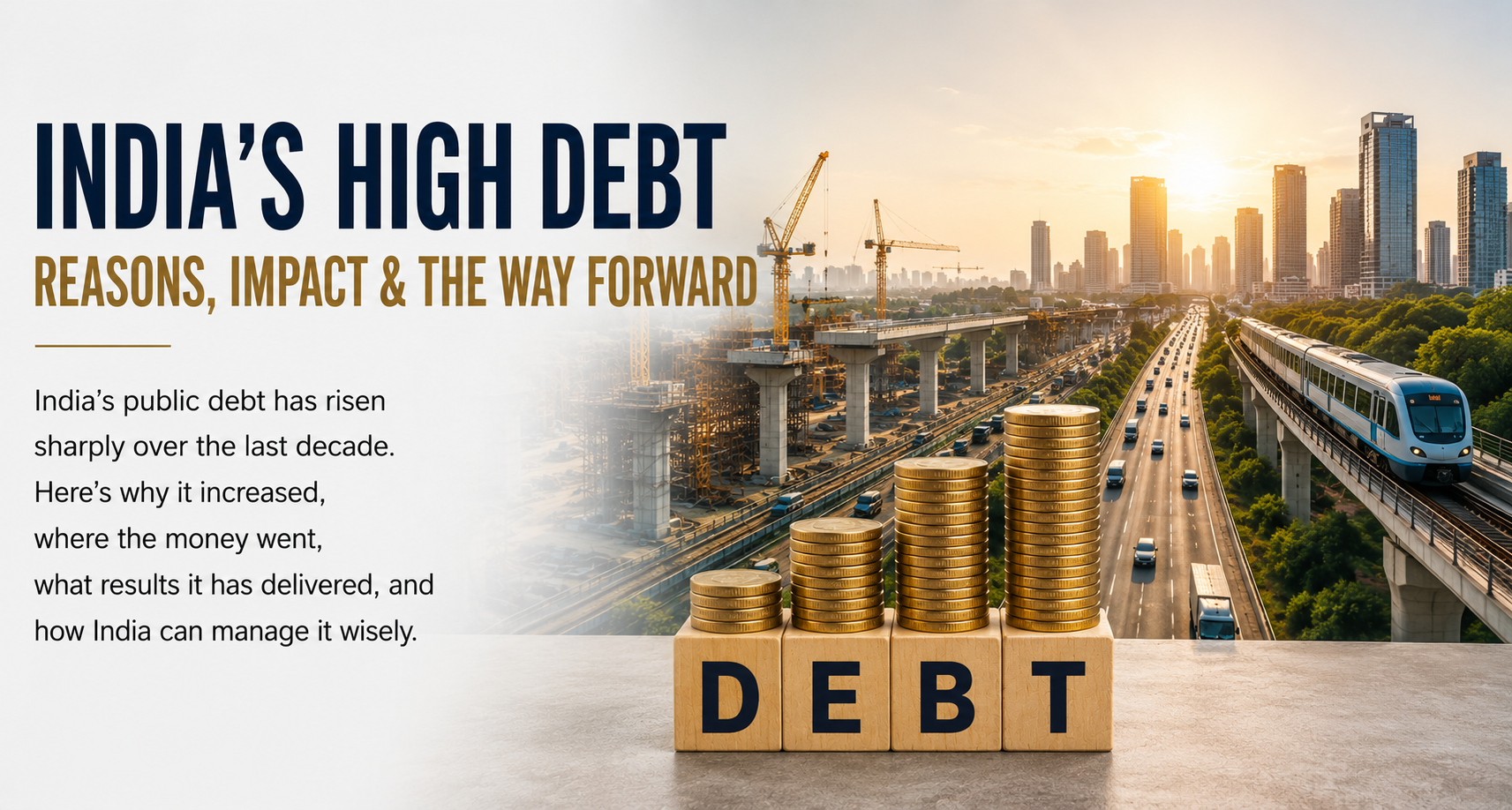
  • India What a Decade of Borrowing Actually Bought Us. Are we in a Debt Trap?

    India What a Decade of Borrowing Actually Bought Us. Are we in a Debt Trap?

    India’s Public Debt Story (2015โ€“2025): What a Decade of Borrowing Actually Bought Us. Are we in a Debt Trap?

    India’s combined government debt has roughly doubled over the past decade. Central government debt alone climbed from about โ‚น121 trillion in FY2020 to an estimated โ‚น197 trillion by FY2026. State liabilities nearly tripled, from ~โ‚น32.6 trillion in FY2016 to ~โ‚น94 trillion by FY2025.

    Numbers like these trigger one of two reactions: alarm or indifference. Neither is entirely right.

    The better question is: What drove this rise, where did the money go, and where does it leave India today?

    Here’s the decade, unpacked.

    The pattern: steady drift, then a shock, then a slow climb-down

    Pre-2020, India’s fiscal deficit sat in a fairly disciplined 3โ€“4% of GDP band, broadly consistent with FRBM targets โ€” even if actual numbers occasionally missed the mark (FY2019 came in around 3.4% against a 3.3% target).

    Then COVID hit. The central fiscal deficit spiked to roughly 9.5% of GDP in FY2021 as revenue collapsed and emergency spending โ€” cash transfers, free food grain, MSME credit guarantees, health spending โ€” went out the door. Debt-to-GDP jumped by an estimated 8โ€“10 percentage points in a single year.

    Since then, the story has been consolidation: the deficit has been brought down to around 5โ€“6% of GDP, with a budgeted target of 4.4% for FY2026. It’s real progress, even if the debt base it’s working off is now structurally higher than it was five years ago.

    Three episodes that explain most of the swings Debt to GDP ratio %

    Demonetisation (Nov 2016): Intended to curb black money and push digital transactions, it also slowed activity and tax collections in the short run โ€” GDP growth cooled and the fiscal deficit widened modestly (to around 3.5% of GDP against a 3% target) in FY2017.

    GST rollout (Jul 2017): A genuine structural reform with long-term revenue upside, but the transition wasn’t free. Collections initially undershot expectations, and the Centre had to borrow to compensate states during the changeover โ€” nudging FY2018’s deficit above target.

    COVID-19 (2020โ€“21): By far the biggest driver. A relief package of โ‚น20 trillion, layered onto a collapsing revenue base, took the deficit from roughly 3.5% to 9.5% of GDP in one year. Was it worth it? Most independent analyses โ€” including from the IMF and RBI โ€” suggest yes: the counterfactual (a sharper austerity response) likely meant a materially deeper contraction. The trade-off was a permanently higher debt stock in exchange for a shallower recession.

    Add to this two smaller but persistent pressures: periodic PSU bank recapitalisation (roughly โ‚น2.2 trillion across FY2018 and FY2020, needed to clean up bad loans) and an expanding footprint of welfare and housing schemes (PMAY, Ujjwala, MGNREGA) that keep revenue spending elevated even as capital expenditure has also been rising.

    The quiet number that matters most: interest payments

    Debt totals get the headlines, but the number that actually constrains policy choices is the interest bill. Central government interest payments rose from about โ‚น6.6 trillion in FY2020 to roughly โ‚น8.1 trillion by FY2022 and now consume somewhere in the range of 20โ€“25% of central revenue receipts. That’s revenue that isn’t available for capex, subsidies, or further consolidation โ€” it’s simply the cost of past borrowing. As global and domestic interest rates moved up through 2022โ€“23, this burden has only gotten heavier.

    Where did the borrowed money go?

    It helps to separate how much India borrowed from what it was spent on. The story changed significantly after COVID:

    • FY2020โ€“21: Borrowing largely supported emergency needs โ€” food distribution, welfare support, MSMEs and bank recapitalisation. Necessary at the time, but with limited long-term growth impact.
    • FY2022โ€“24: The focus shifted toward capital expenditure โ€” roads, railways, healthcare and infrastructure. Capex as a share of GDP steadily increased.

    The positive shift: India increasingly moved from borrowing to support consumption toward borrowing to build productive assets.

    The road ahead

    The government’s own glide path targets a fiscal deficit closer to 4% of GDP, with debt-to-GDP expected to ease from its COVID-era peak (above 60%) toward the high-50s by FY2026. Getting there sustainably will likely depend on a few things playing out together: continued nominal GDP growth outpacing debt growth, disciplined targeting of subsidies rather than blanket cuts, tighter oversight of contingent liabilities and off-budget borrowing (state guarantees, PPP obligations), and a continued shift of the expenditure mix toward capital rather than revenue spending.

    None of this is dramatic. Fiscal consolidation rarely is โ€” it’s mostly the unglamorous work of holding a line over several budget cycles. But the direction, so far, has been the right one.

     The takeaway

    The last decade brought demonetisation, GST, COVID-19 and a major infrastructure push. As a result, India’s public debt is roughly twice what it was in 2016.

    But debt is only one side of the story. India also built a stronger digital payments ecosystem, a unified tax system and significantly better infrastructure, while managing a strong post-COVID recovery.

    The key question now isn’t how much India owes, but whether economic growth can continue to outpace the growth in debt.


    What’s your read โ€” was the post-COVID borrowing surge the right call, or did it set a debt base that will constrain policy for years to come? Would like to hear other perspectives on this.

    #IndianEconomy #PublicFinance #FiscalPolicy #Macroeconomics #Debt #Budget2026 #EconomicPolicy #India
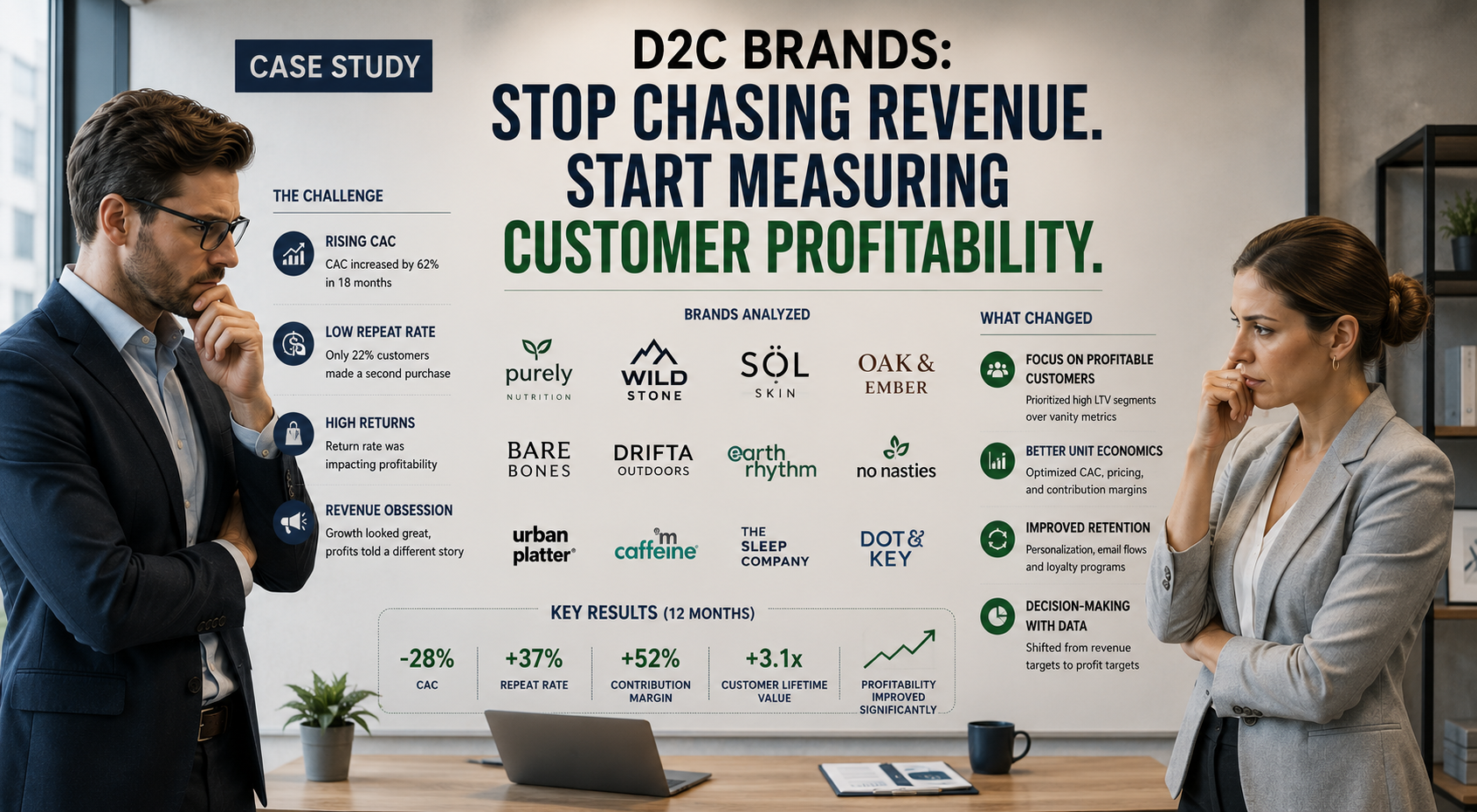
  • D2C Brands: Stop Chasing Revenue. Start Measuring Customer Profitability.

    D2C Brands: Stop Chasing Revenue. Start Measuring Customer Profitability.

    For years, D2C has been presented as the smarter way to build a consumer brand.

    Go directly to the customer. Avoid expensive stores. Build your own digital identity. Use social media to acquire customers. Scale quickly.

    It sounds simple.

    But the reality is very different today.

    D2C Brands: Stop Chasing Revenue. Start Measuring Customer Profitability.

    Customer acquisition costs are rising. Competition is increasing. Online marketplaces are crowded. Consumers have endless choices. And customer loyalty is becoming harder to earn.

    So the real question for a D2C brand today is not:

    โ€œHow do I sell more online?โ€

    It is:

    โ€œHow does my customer actually make a purchase decision, and where should I be available when that decision happens?โ€

    That requires looking beyond the D2C label.


    The D2C customer is not one customer

    One of the biggest mistakes brands make is treating their online customer as a single segment.

    India has very different consumer groupsโ€”from affluent consumers to upper-middle-class, middle-income and value-conscious households.

    But income alone does not determine behaviour.

    Category determines behaviour.

    A consumer may be extremely price-sensitive when buying groceries but may pay a premium for skincare.

    The same person may compare five furniture brands before buying a sofa but purchase a familiar FMCG product almost automatically.

    That is why customer behaviour has to be understood category by category, occasion by occasion and need by need.

    Consider a few examples.

    Fruits & vegetables

    Freshness, availability, convenience and price can dominate the decision.

    Furniture

    Durability, finish, design, comfort, quality, price and confidence in the product become important.

    Beauty & cosmetics

    Product efficacy, ingredients, packaging, reviews, colour, price, trust and brand image can all influence the decision.

    There is therefore no universal D2C customer.

    There are category-specific customers with different reasons to buy.


    The customer knows moreโ€”but not necessarily enough

    The digital consumer today has extraordinary access to information.

    With a few clicks, customers can compare:

    • Prices
    • Reviews
    • Features
    • Competitors
    • Offers
    • Influencer opinions
    • Product demonstrations
    • Customer experiences

    But information availability does not automatically create understanding.

    The customer may see ten products but still struggle to decide which one is right.

    That is where trust, reviews, brand credibility, product experience and availability become critical.

    And this is where physical retail still has an important role.

    A customer can touch a product.

    See its finish.

    Try it.

    Speak to someone.

    Understand the difference between two products.

    And sometimes, simply seeing the brand in a physical environment creates confidence.


    The biggest D2C problem today: Customer acquisition

    Digital platforms have made customer access easier.

    They have also made competition much more intense.

    A D2C brand is competing for attention on the same platforms as hundreds or thousands of other brands.

    Meta, Instagram, YouTube, Google and marketplaces can generate enormous reach.

    But reach comes at a price.

    As more brands compete for the same audience:

    Customer acquisition becomes more expensive.

    And if the customer makes one purchase and never returns, the economics become even more difficult.

    This creates a dangerous cycle:

    Higher advertising spend โ†’ higher acquisition cost โ†’ lower contribution โ†’ greater dependence on repeat purchases.

    Therefore, the real question is not how much you spend to acquire a customer.

    It is:

    How much value can you generate from that customer over time?


    D2C and retail: Are the costs really that different?

    This is where I believe many D2C entrepreneurs should take a closer look at their numbers.

    Retail has obvious costs:

    Rent + people + inventory + utilities + operations.

    D2C has a different-looking cost structure:

    Technology + digital marketing + customer acquisition + fulfilment + returns/refunds + inventory + customer service.

    The cost heads are different.

    But the underlying economics are surprisingly similar.

    Both businesses have to:

    • Hold inventory
    • Acquire customers
    • Fulfil orders
    • Manage returns
    • Build trust
    • Provide customer service
    • Maintain technology/processes
    • Generate repeat purchases

    So the assumption that โ€œD2C is automatically cheaper than retailโ€ needs to be challenged.

    It depends entirely on the category, ticket size, margins, repeat rate, geography, assortment and customer acquisition economics.


    So should D2C brands enter retail?

    In many cases, yesโ€”but not blindly.

    Retail can provide something that digital advertising cannot always provide:

    Physical discovery and local trust.

    Suppose a brand establishes a profitable store in a particular catchment.

    It understands the local customer.

    It gets the assortment right.

    Its pricing works.

    Its people are trained.

    Its product mix generates healthy margins.

    And it builds repeat customers within a 3โ€“4 km radius.

    Now the brand has something extremely valuable:

    A proven local business model.

    The next opportunity is to replicate that model in another geography.

    Then another.

    Then another.

    That is very different from simply opening stores because the brand wants a physical presence.


    The future may not be D2C versus retail

    I believe the more relevant question is:

    Why choose one when the customer is using both?

    A consumer may discover your brand on Instagram.

    Read reviews on Google.

    Compare prices on a marketplace.

    See the product in a store.

    Order it through quick commerce.

    Buy again from your website.

    And recommend it to a friend on social media.

    The customer does not think in channels.

    The customer thinks:

    โ€œI want the right product, at the right price, with minimum effort and maximum confidence.โ€

    Brands need to think the same way.


    But there is a warning for D2C brands

    Do not rush into retail simply because everyone else is doing it.

    Before opening a store, ask:

    Do I have enough SKUs?

    Is my assortment strong enough?

    Can I create a meaningful store proposition?

    Are my margins sufficient?

    Can the store generate repeat business?

    Do I understand the catchment?

    Can I train people to sell the product properly?

    A store cannot become a physical warehouse for your online products.

    It needs a reason to exist.

    The assortment, store experience, pricing, visual merchandising and customer interaction must come together as one proposition.


    The next competitive advantage: Operational excellence

    For D2C brands, the next phase will not be won simply by having a better Instagram campaign.

    It will be won through better execution.

    Brands need systems that tell them:

    Where is the customer dropping off?

    Why is the customer not completing the purchase?

    Why are returns increasing?

    Which SKU is generating repeat purchases?

    Which geography is profitable?

    Which channel is acquiring the best customers?

    Which customers are worth retaining?

    Where is inventory getting stuck?

    And most importantly:

    What does it cost to serve each customer?

    Technology will play a major role here.

    But technology alone is not the answer.

    Data + process + people + execution have to work together.


    My advice to D2C brands

    Before spending the next โ‚น1 crore on customer acquisition, stop and calculate the economics.

    Compare:

    D2C economics vs Retail economics vs Marketplace economics vs Quick Commerce economics.

    Look at the complete pictureโ€”not just revenue.

    Measure:

    CAC Customer Lifetime Value Contribution Margin Repeat Purchase Rate Return Rate Inventory Turns Gross Margin Cost-to-Serve Store Productivity GMROF

    Then decide where your customer should find you.

    Because the future is unlikely to belong to brands that are only D2C.

    It will belong to brands that can move seamlessly across D2C + retail + marketplaces + quick commerce, while maintaining healthy unit economics.


    The final thought

    The D2C opportunity in India is still enormous.

    But the easy growth phase is getting harder.

    Consumers have more choices.

    Advertising is more expensive.

    Competition is intense.

    Loyalty has to be earned repeatedly.

    And profitability can disappear very quickly behind attractive revenue numbers.

    So don’t ask:

    โ€œHow fast can I acquire customers?โ€

    Ask:

    โ€œHow profitably can I acquire, serve and retain them?โ€

    And don’t ask:

    โ€œShould I be D2C or retail?โ€

    Ask:

    โ€œWhere does my customer want to buy from meโ€”and which combination of channels creates the strongest business?โ€

    D2C may have started the journey by removing the middleman.

    The next stage is about removing the friction between the customer, the brand and a profitable transaction.

    That is where the real scale will come from.

    #D2C #Retail #Ecommerce #ConsumerBehaviour #CustomerAcquisition #QuickCommerce #RetailStrategy #BusinessTransformation #OperationalExcellence #CustomerExperience #Profitability #IndianRetail